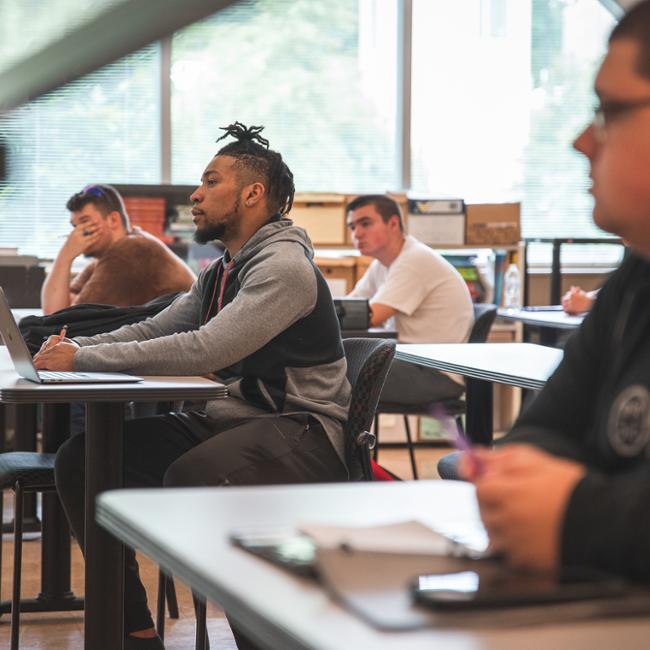
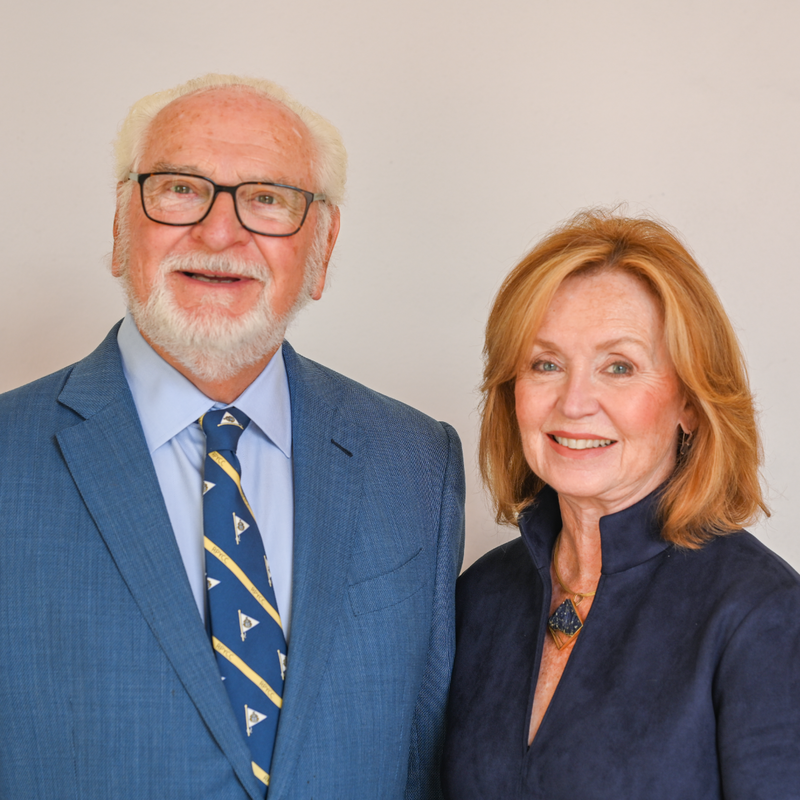
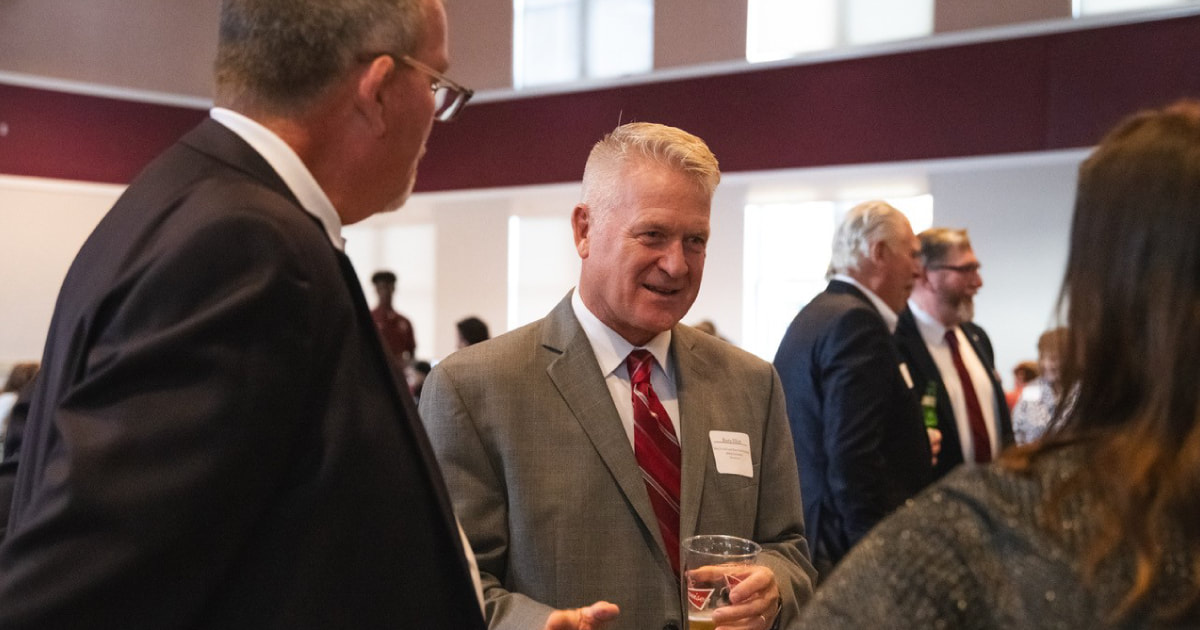
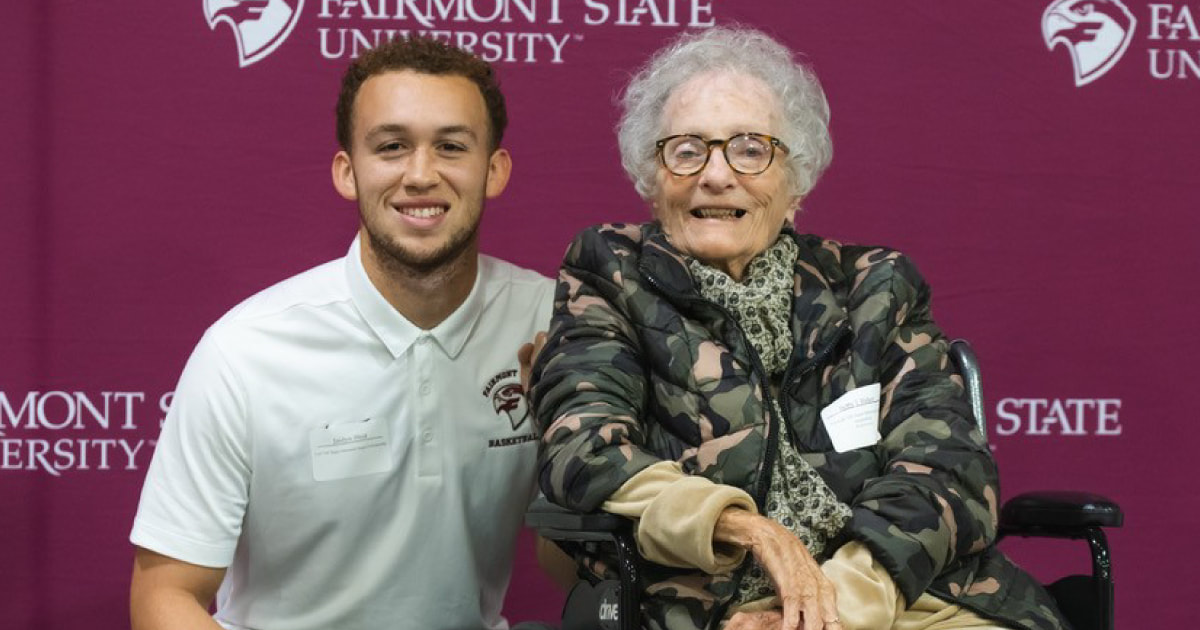
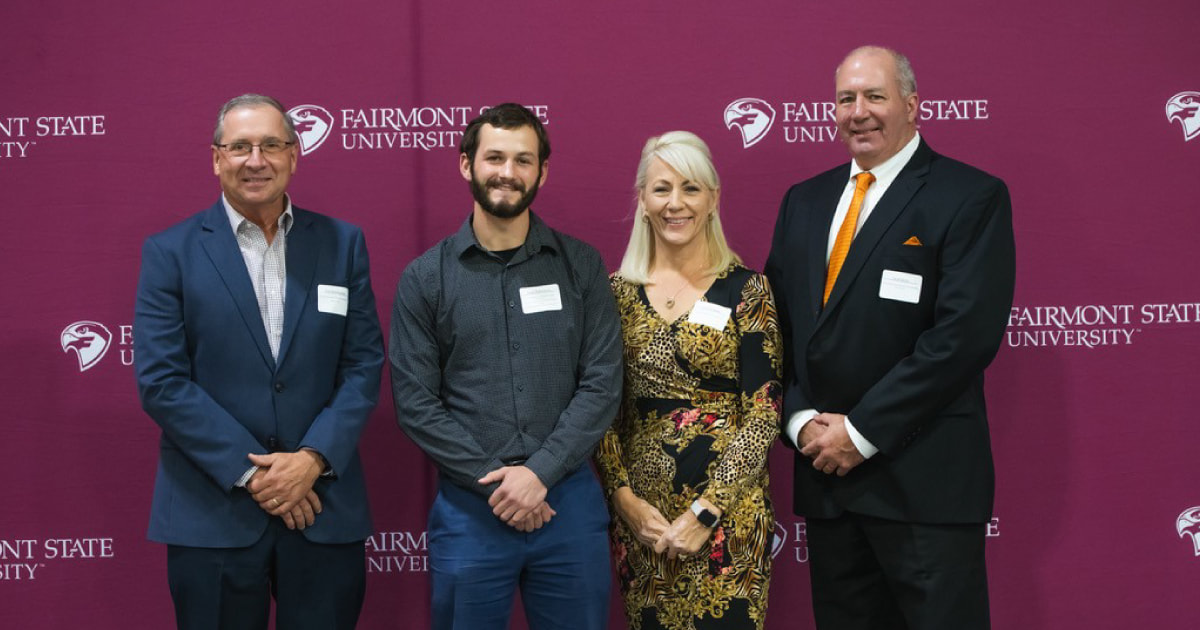
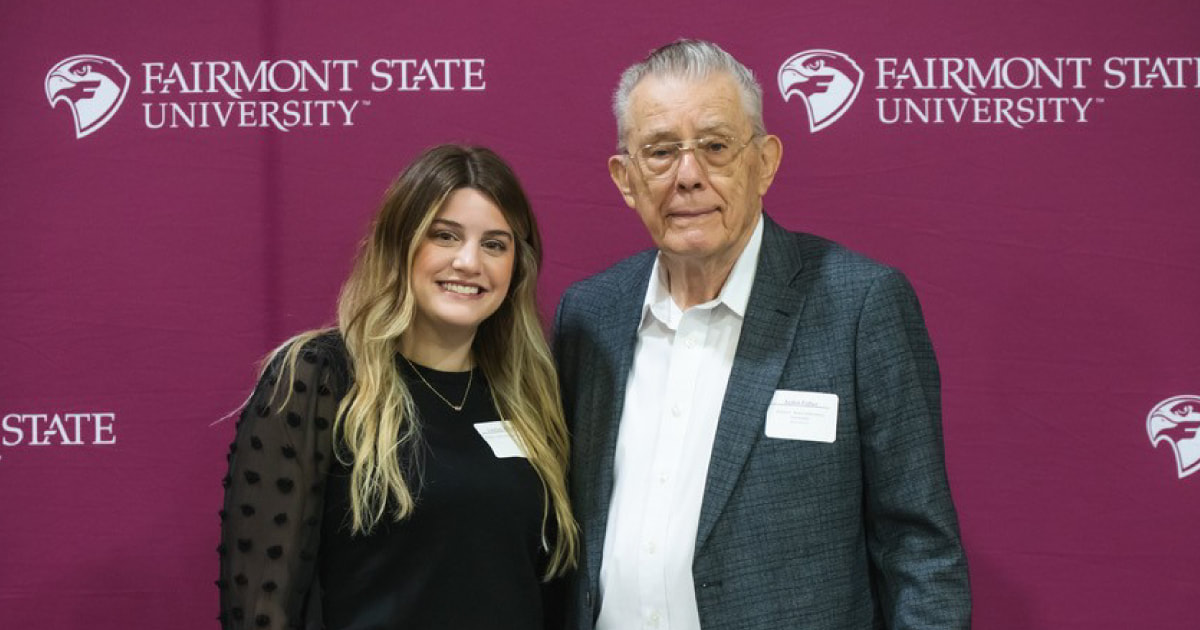
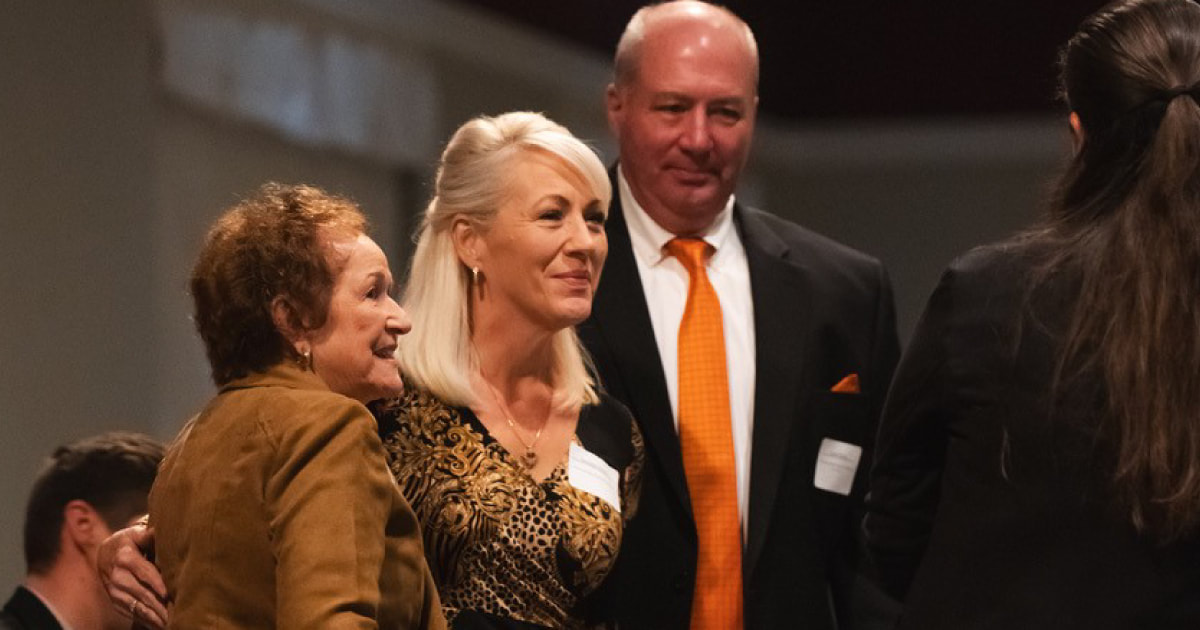
When asked why he chose to support working students at Fairmont State, Lambiotte explained that he hadn’t really considered establishing a scholarship until he had an opportunity to visit campus in 2023 and spend some time speaking with students.
“The campus visit was somewhat emotional for me and brought back a lot of memories,” said Lambiotte. “While the tuition cost back in my day was really cheap, it was still a struggle to attend college. Most of my memories related to the jobs I had done to stay in school. I worked in three different gas stations starting the summer between my junior and senior years of high school and continuing through my college years. At that time, working in a gas station was not like working in a convenience store/gas station today. You actually pumped gas for the customers, washed cars and did mechanic work.” “During my visit, I thought about how I would have appreciated some financial support when I was in college,” Lambiotte continued. “I was really impressed with the quality of the students I met during my visit. I realized that some students are struggling with finances while attending school and hope I can help some who are in that situation.” “Having the opportunity to reconnect alumni like Brent with current students is immensely rewarding,” according to Timothy Liebrecht, Director of Development and Corporate Relations at the Fairmont State Foundation. “In his visit, Brent afforded students the opportunity to ask him questions as he shared life lessons and career insights with them. This type of engagement impacts students’ futures by giving them access to unique perspectives and practical advice. We are incredibly grateful for his time on campus and his decision to make this financial investment in Fairmont State students. Brent is a perfect example of how one individual can make a truly life-changing impact.” Lambiotte earned his Education degree with an Industrial Arts focus from Fairmont State. After teaching in a high school setting, he went on to build a career in automotive supply chain and logistics, working for several automotive companies, including Mercedes-Benz and Honda. During his career pursuits, Lambiotte achieved an MBA from The Ohio State University, received three professional certifications, and was admitted to practice before the Interstate Commerce Commission. After leaving his automotive career, Lambiotte shared his industry knowledge and expertise as an adjunct professor at the University of Alabama at Birmingham Collat School of Business, and taught certification classes to working professionals who were pursuing certification by The Association for Supply Chain Management (ASCM).
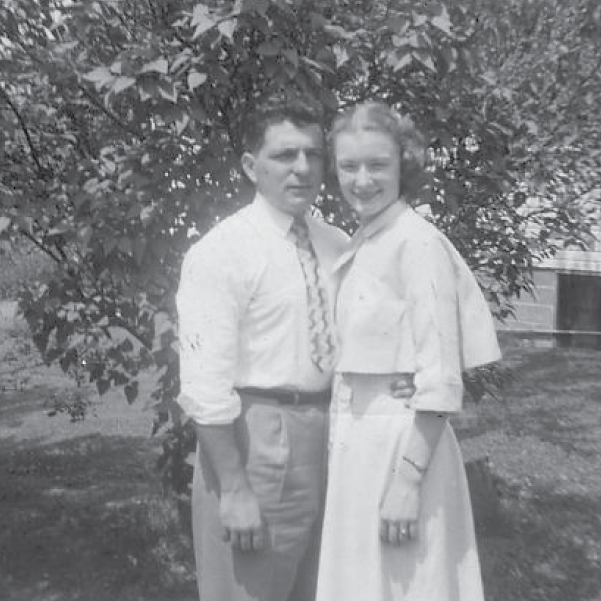
Joseph Guido attended Fairmont State for two years before enlisting in the armed forces to fight for his country during World War II. Upon his return, Joseph completed his undergraduate degree at Fairmont State and went on to earn a doctorate in dentistry from the University of Maryland. He returned to Fairmont with his wife Therese, of Baltimore, Maryland, and he served the Fairmont community as a dentist from 1951 until the mid-1980s.
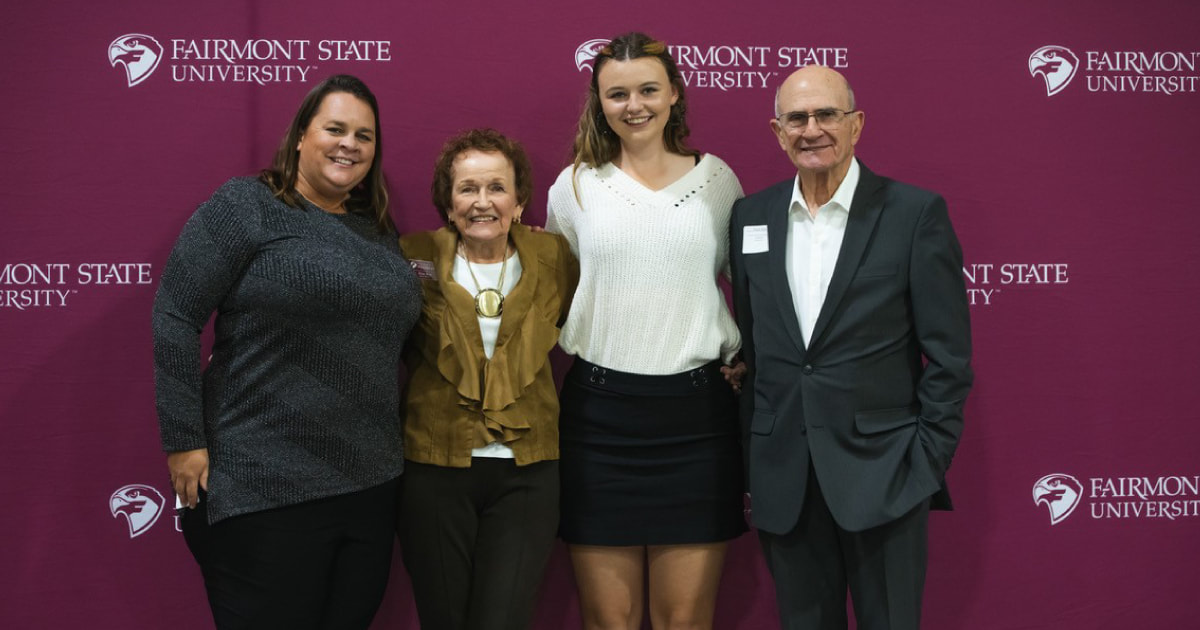
Joseph and Therese raised five children, each attending classes at Fairmont State. John graduated magna cum laude in 1982 with an accounting-focused business degree and a love for economics. John’s brothers chose advanced education in medicine and pharmacy at West Virginia University after their time at Fairmont State, and his sister earned degrees in nursing and psychology at Fairmont State before pursuing a degree in education from Virginia Tech. John credits his father with instilling his ambition and drive, while his mother demonstrated the importance of patience. He has carried these qualities with him through his educational pursuits and into his successful career as a Certified Public Accountant. John’s wife Kat is a skilled homemaker and community volunteer, and he credits her role as a caregiver for his continued professional success and the successes of their daughter Josilyn. When asked why they chose to support first-generation students pursuing healthcare and accounting degrees, John said “I am inspired by ambition, and I believe those who pursue challenging careers in these fields should be supported. Kat and I hope that the students who receive this scholarship are highly ambitious and can achieve the success that my siblings and I have achieved because of our time at Fairmont State.” “We are grateful for John and Kat Guido’s generous gift. As a first-generation student myself, I know from experience that being the first in your family to go to college presents obstacles. The Dr. & Mrs. Joseph P. Guido Memorial Scholarship will help more first-generation students overcome those obstacles and succeed,” said Dr. Mike Davis, president of Fairmont State University. “On top of financial obstacles first-generation students face, accounting and healthcare are challenging majors. This generous scholarship will allow students in these fields to focus on academic success on their way to becoming exceptional accounting and healthcare professionals.” John Guido serves as a member of the Board of Directors for the Fairmont State Foundation. Josilyn, a third-generation Falcon and the daughter of John and Kat, is currently enrolled at Fairmont State and will graduate this year with a degree in studio art and a minor in digital technology and design. The Dr. and Mrs. Joseph P. Guido Memorial Scholarship will be available to first-generation college students in their sophomore, junior, or senior years who study for degrees in the areas of health sciences, nursing, or accounting. Preference will be given to students expressing interest in becoming a physician, pharmacist, nurse, or certified public accountant in public practice. Recipients must maintain a grade point average of 3.5 or better.
New to this year’s event is the Falcon Day of Giving Livestream! Fairmont State will begin the livestream at midnight on Thursday, February 29 as President Davis goes live to kick off the Day of Giving. Throughout the day there will be live interviews from faculty, staff, coaches, and students, performances, and updates live from campus. You can tune into the live stream on the Falcon Day of Giving website at https://falconsgive.fsufoundation.org or on Fairmont State’s Facebook and Instagram feeds @fairmontstate.
Day of Giving shines a spotlight on giving at Fairmont State and creates a sense of excitement around collective philanthropy. There are special events planned leading up to and during each Day of Giving to encourage participation from all segments of the University and the greater Fairmont community – from alumni and friends to students and faculty. The Day of Giving dunk tank and punch board are both returning this year and are designed to engage those passing through the Falcon Center on their way to class or work throughout the day. Several members of faculty and staff will be courageously hopping in the dunk tank to raise funds for the areas and programs they are so passionate about, including Fairmont State University President Dr. Mike Davis. This year, each athletic team with at least 40 individual donors during Day of Giving gets to toss their coach in the pool, encouraging student-athletes to take part in raising funds for their programs. “Since 2019, the Falcon Day of Giving has raised over $1.2 million to support a variety of scholarships as well as programmatic support for Fairmont State University students to realize their endless potential,” says Fairmont State Foundation President Dr. Anne Bolyard. “During this 24-hour giving event, we invite the friends and alumni of Fairmont State University to continue this legacy of support to our current and future Falcons.” In the years since the first event, support and participation continues to grow. Each year, a small group of donors generously agree to match gifts to various scholarships, programs, teams, and colleges. When individual donors select a qualifying area to support on Day of Giving, these matches kick in, doubling or even tripling the impact of a single gift. Matches are a critical component of the overall goal. William Laughlin and his wife Lois Muto Laughlin, an alumna of Fairmont State, are retired faculty members and have once again pledged $12,500 in matching gifts for Fairmont State’s five academic colleges, the Colleges of Nursing, Business and Aviation, Science and Technology, Liberal Arts, and Education Health and Human Performance. The Laughlin’s are also sponsoring The Rise and Shine Challenge for Athletics. Starting at 4 a.m. there is $2,500 in matching gifts up for grabs to all athletic teams. The matching dollars will be available on a first come first serve basis. University President Dr. Mike Davis is sponsoring several matches and a donor challenge. This year, President Davis will donate $1 to the Falcon Fund for every donor that makes a gift for Falcon Day of Giving to any participating area. The Falcon Fund is for the university’s greatest needs and funds expenses such as scholarships, travel opportunities, classroom and lab equipment, and emergency aid. Additional matches and challenges include: - Student Veterans Organization Dollar for Dollar Match - Gary K. and Barbara Bennett will match gifts to the Student Veterans Organization up to $5,000. - The Lunch Rush Challenge - The area receiving gifts from the most donors from 11 a.m. to 1 p.m. will earn an additional $1,000 from Fairmont State Foundation President Anne Bolyard. - Praxis Test Dollar for Dollar Match - An anonymous donor will match gifts to the Praxis Test initiative for education students, dollar for dollar up to $4,000. - Athletics Power Hour Match - At 2 p.m. a $2,500 match will be unlocked for athletics. Jennifer and Scott Kinty will be matching gifts made to any athletic team starting at 2 p.m., dollar for dollar up to $2,500. All matches and challenges for the day can be found by visiting https://falconsgive.fsufoundation.org/prizes. The Falcon Day of Giving is an opportunity for the Fairmont State community to support the areas that matter most to them. Whether it is a scholarship fund, athletic team, student organization, academic department, the Academy for the Arts, or the Falcon Marching Band there are numerous opportunities to make an impact with your support. You can make your gift by visiting https://falconsgive.fsufoundation.org, by calling 304-534-8786, or by visiting the Fairmont State Foundation located in The Erickson Alumni Center at 1300 Locust Avenue.
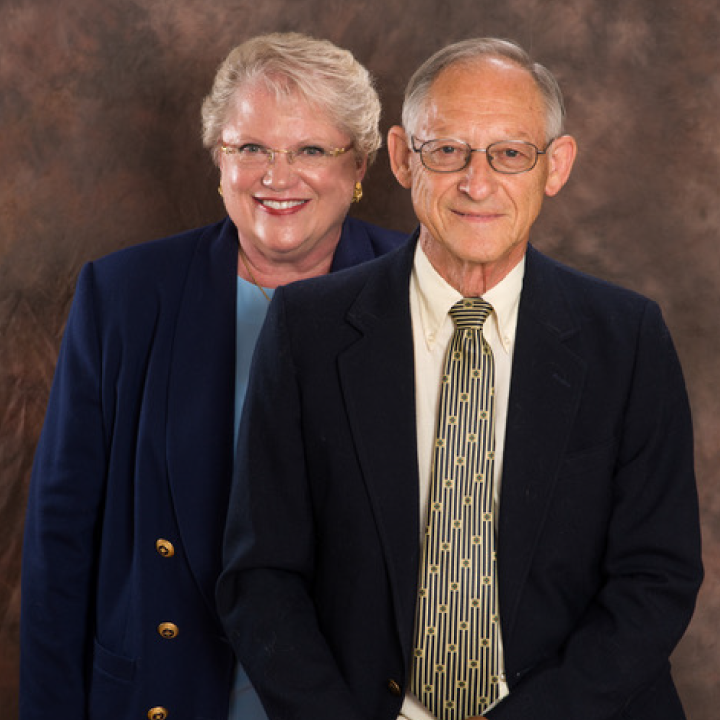
Dr. Errol Reese started his pursuit of higher education at Fairmont State and after completing his undergraduate degree in two years, he went on to earn a degree in dentistry. Errol’s mother attended the Fairmont State Normal School, and his father was very supportive of Fairmont State. Both he and Dr. Patricia Reese had lifetime careers as dental professors and university administrators. Both Errol and Patricia have always believed in the great importance of higher education. They both have children and grandchildren with doctoral degrees. Both have spent a great deal of time in higher education in their own careers. Patricia serves on the Council of Regents at Loyola University and has been for 21 years. Her daughter is about to join her on the council, something she is very excited about experiencing together.
Errol and Patricia have established a similar fund at the University of Maryland, Baltimore, and they are excited to provide this opportunity for faculty and staff at Fairmont State through the Falcon Mini-Grant Program. Errol has a history of leading and supporting faculty development throughout his career. During his time as the Dean of the College of Dentistry at UMB, he realized faculty would benefit from learning about preparing grant proposals, coordinating projects, and reporting on the outcomes – skills that are essential for faculty, especially at a small schools like Fairmont State. The Office of Grants and Sponsored Programs at Fairmont State University administers the Falcon Mini-Grant Program offering competitive grant awards to faculty and staff each academic year for the purpose of supporting institutional needs and providing opportunities to advance the mission of Fairmont State University. “The generosity of the Reese family will provide long-term support for the Falcon Mini-Grant program,” said Christy Burner, Director of Grants and Sponsored Programs at Fairmont State. “This program helps our faculty and staff develop skills and gain confidence in grant writing, which increases our capacity as a campus to secure more external funding for special projects and initiatives.” Grant proposals are reviewed by a selection committee to assess significance of need, alignment with Fairmont State University’s mission, innovation and creativity, and cost effectiveness. Any faculty or staff member is eligible to apply for a Falcon Mini-Grant ranging from $500 to $3,000 Awarded funds may be used for a variety of purposes including research projects, special programs, lab equipment, or professional development.
Fellowships differ from scholarships as they provide long-term support, rather than one-time financial dispersals. Students in the Datha and Gene Smith Fellowship & Summer Bridge Program are bolstered throughout their college careers.
Once selected, fellows begin their program with a mandatory bridge program, a five-day stay at Fairmont State during the summer. This bridge program gives fellows an indispensable link from high school to college with the aim to reduce the anxiety that comes with the transition. It gives these students a positive jump-start to college life. A fellowship coordinator ensures that students receive ongoing support, which includes time to socialize with other fellows. Throughout the five-day summer bridge, fellows live on campus, which helps them gain familiarity with the university’s layout. They have the opportunity to talk with advisors, meet other students and learn about academic studies—all in a relaxed setting. Next year’s summer bridge program runs July 6-11, 2024. “Bridge week happens over the summer, so the fellows get to know each other before classes start,” said Marissa Mauro, Fairmont State Foundation Director of Development for Annual Giving and Stewardship. “They develop new friendships and build a community of camaraderie.” While bridge programs vary at different universities, Fairmont State’s main goal is to reduce the barriers that intimidate high school students from going to college. In past generations, a post-secondary degree didn’t always matter. Young people attained fulfilling work and stayed with one company for their entire working lives. On the job training was common, and it gave promising employees opportunities for advancement. Today’s job market is different. According to the Association of Public and Land-grant Universities, income disparity between college graduates and high school graduates starts early. While still in their 20s, college graduates can expect to earn on average $20,000 more per year than high school graduates. Those numbers add up. Over the course of a lifetime, college graduates earn $1 million more than those without a degree. West Virginia’s goal is to have 60 percent of its adult population attain a college degree or other type of credentialed education by 2030. Right now, fewer than one-third of West Virginians have any of these credentials. Fairmont State’s commitment to first generation students is evident in its numbers. Since 2012, nearly 40 percent of the university’s graduates have been first generation students. Forty-three percent of Fairmont State’s current freshmen are first generation students. “As a first-generation West Virginia college student, I understand the challenges of being the first in your family to attend college,” Interim Vice President of Student Success Alicia Kalka said. “My family was highly supportive of me going to college and planted that seed into me at a very young age. We had to learn together the process of enrolling and all the resources that I needed to be successful. If I had attended a summer bridge program like this, I think my transition would have been easier. I am so proud of our Datha and Gene program because we are providing a true bridge for first generation students from West Virginia and access into post-secondary education.” Although neither Gene nor Datha Smith pursued a post-secondary education, they saw its value. In 2005, the Smiths established a foundation to help first generation students. Since then, the Smiths have passed, but their children have carried on their parents’ legacy by founding this recent fellowship. “Fairmont State is here to ensure that our first-generation students know there is a way, and we are here to help them reach their dream of going to college,” Kalka said. “As a university, we are mission driven to educate and prepare people for the workforce. When we achieve this, we’re contributing to West Virginia as a whole.” It is through this fellowship that students are able to achieve their goals of a four-year degree. Because the fellowship covers many of the costs to attend Fairmont State, fellows are able to focus on academics rather than a future with inordinate student debt. “I’ve watched the students gain confidence as they make the transition to college life,” said Erin Hohl, Coordinator of the Datha and Gene Smith Fellowship. “The fellows know they are showing their potential to do something life-changing for themselves after going through the fellowship.” Fellows Accepted into the 2024 Summer Bridge Program will:
Requirements to Apply for the Datha and Gene Smith Fellowship:
You can apply for the The Datha and Gene Smith Fellowship online. The deadline to apply is March 1, 2024.
John wanted to do whatever he could to help others achieve advanced education so that they could help other less fortunate people. Being a frugal person, John, Jr. carefully managed his limited sources of income. Thus, a significant portion of this endowment consists of the money from his own savings account.
“I am thankful that we will be able to provide funds to teacher candidates pursuing special education,” said Julie Reneau Professor of Special Education and Executive Director of Autism Individualized Mentoring & Support Services. “There is a critical shortage of special educators in our region and skilled special educators are needed to help students with disabilities reach their long-term goals. I am so amazed and appreciative that the money for much of this endowment comes from John Jr.” The John Anthony Carbone, Jr. Memorial Endowed Scholarship will provide funds to students demonstrating financial need to cover tuition, fees, books, room, and board. Students who are residents of West Virginia or children of West Virginia residents are eligible for this award with preference given to graduates from high schools in Marion, Monongalia, Harrison, and Taylor Counties. Recipients must maintain a grade point average of 3.0 or better and be entering their junior year of studies as a special education major. On November 3, the Fairmont State Foundation will welcome West Virginia native and Fairmont resident, Dr. Anne Bolyard to the organization as President.
Dr. Bolyard holds a bachelor’s degree in health services administration from West Virginia Institute of Technology and a master’s degree in community health education from West Virginia University. In 2012 she earned a doctorate in educational leadership from Marshall University. She has also earned two professional certifications in research administration.
"The Foundation Board is excited to welcome Dr. Bolyard to Fairmont State. She comes to us with years of experience in fundraising in a higher education setting and brings skill, energy, and optimism to her new position," according to Foundation Board Chair, Dixie Yann. In addition to her educational experience, Dr. Bolyard brings with her more than 20 years of experience in higher education, including securing external funding, research administration, strategic planning, project management, and governmental relations. She is excited to employ her skills and training with board members and colleagues to build on current success and look toward the future for both Fairmont State Foundation and Fairmont State University. She is also an active volunteer, serving as a neonatal intensive care unit cuddler at WVU Medicine’s Children’s hospital, a board member for the Marion County Rescue Squad, and an elected member of the Fairmont City Council. "I am excited to welcome Dr. Bolyard to our campus. I have confidence she will quickly become an integral member of Fairmont State," said Fairmont State President Mike Davis. "Her impressive background in higher education and passion for helping students and those around her will serve our University well." On Friday, October 20, the Fairmont State Foundation and our guests celebrated the 2023 Scholarship & Stewardship Banquet. The evening was an opportunity to celebrate the incredible impact of our donors’ generosity and recognize many of this year’s deserving scholarship recipients. Additionally, the Foundation honored the 2023 inductees to both the 1865 Heritage Society and Column Society. Thank you to all who attended!
David Warren Harper, M.S., dedicated his career to safety, health, and loss control. He taught at East Fairmont High School and worked in industry and higher education, emphasizing the importance of safety in various settings. In his memory, the Occupational Safety Scholarship has been created to strengthen professionals and programs in businesses, organizations, and industries, with the goal of reducing accidents and fatalities.
“We extend heartfelt gratitude to David Warren Harper, M.S. and Nancy Valentine Harper, Ed. D. for their generous support of the Occupational Safety Scholarship at Fairmont State University, benefiting both our students and West Virginia natives,”” said Abby Chapman, Assistant Professor of Occupational Safety. “Their commitment equips future safety professionals to ensure workplaces are secure, incidents are minimized, and lives are saved. This scholarship not only empowers students but also addresses the growing demand for safety experts in various industries. David Warren Harper's dedication to Occupational Safety illuminates the path to a safer professional world, particularly for the people of West Virginia." “This scholarship will provide valuable financial assistance to students in our unique Occupational Safety program,” said Dean of the College of Science and Technology, Steve Roof. “Fairmont State is one of only twelve institutions in the country where graduates also earn the designation Graduate Safety Practitioner.” David’s parents understood the importance of education and encouraged Mr. Harper and his four siblings to pursue advanced degrees. He studied at West Virginia University, earning degrees in Social Studies, Health and Physical Education, and Secondary Education in 1970, followed by a master’s degree in industrial safety and safety education in 1972. David was a consummate safety professional and a selfless person who placed the needs of others ahead of his own. Nancy Valentine Harper, Ed.D., a Fairmont State alumna and David’s widow, began her career in music education at East Fairmont High School before transitioning to the Marion County 4-H youth development program, and later advancing to National 4-H Program Leader with the United States Department of Agriculture. By financially supporting scholarships in music education, her legacy will continue to support the programs that provided the foundation for a long and successful career. “The College of Education, Health and Human Performance extends our heartfelt gratitude to our generous donors, Mr. and Dr. Harper, whose support is paving the way for a brighter future in arts education,” said Dr. Amanda Metcalf, Dean of the College of Education, Health and Human Performance. “We firmly believe in the transformative power of the arts and their role in providing a well-rounded education that fosters creativity, critical thinking, and personal development. The creative arts offer a unique platform for students to explore their inner worlds, express their thoughts, and find their voices. They teach us to embrace diversity, to appreciate different perspectives, and to connect with the world on a deeper level.” Metcalf continues and describes how this gift will affect the outcomes of future arts educators at Fairmont State. “Thanks to the Harper's generosity, we can continue nurturing the next generation of artists, educators, and thinkers who will shape the lives of those in which they engage. Our deepest appreciation is extended to our Mr. and Dr. Harper for recognizing the transformative potential of art education. Through their support, they are aiding us in inspiring and preparing the next generation of educators who will, in turn, inspire countless others.” Nancy received a four-year scholarship to study music at Fairmont State, and she was the first in her family to attend college. She considers her time at the University to be some of the most enjoyable years of her life. She was involved in various student organizations, including Sigma Kappa Sorority, Sigma Alpha Iota Women’s Music Honorary Fraternity, and performing as a piano accompanist for the Collegiate Choir. Nancy values her experiences at Fairmont State for setting her on a path to a successful career and she hopes that this scholarship will foster the same passion for learning and service in those receiving this financial assistance. The couple’s giving philosophy has been guided by the familiar proverb “If you give a man a fish, you feed him for a day. If you teach a man to fish, you feed him for a lifetime.” Nancy explained her hope that by providing scholarship assistance to young people, they will be “fed” for a lifetime by acquiring academic knowledge, skills, and abilities to improve their own lives, the lives of others, their communities, and the world. “My undergraduate degree from Fairmont State served as the foundation for a long and productive career,” said Nancy. “I would like other young people to have similar experiences on which to start their trajectories into productive, positive family members, employees, and citizens, some of whom may change the world.” The David Warren Harper, M.S., and Nancy Valentine Harper, Ed.D., Occupational Safety Scholarship, and the David Warren Harper, M.S., and Nancy Valentine Harper, Ed.D., Music Education and/or Education Scholarship will provide financial assistance to qualifying first-generation students living in West Virginia. Preference will be given to West Virginia 4-H and Future Farmers of America members from Randolph and Marion Counties, further emphasizing the commitment to supporting local students. If no music education students are available for the related scholarship, students in other education fields will be considered.
Christine Murphy holds an accounting degree from Fairmont State and currently serves as the President of FCX Systems, Inc. in Morgantown. She joined FCX in 2010 as the Controller before advancing to the President role. Prior to her time at FCX, Christine worked for the West Virginia University Foundation for eighteen years, where she was responsible for disbursements of over $40M. While there, she established the purchasing/corporate card program, prepared monthly financial statements, trained internal and external users on software applications, and assisted in the development of a customized software program.
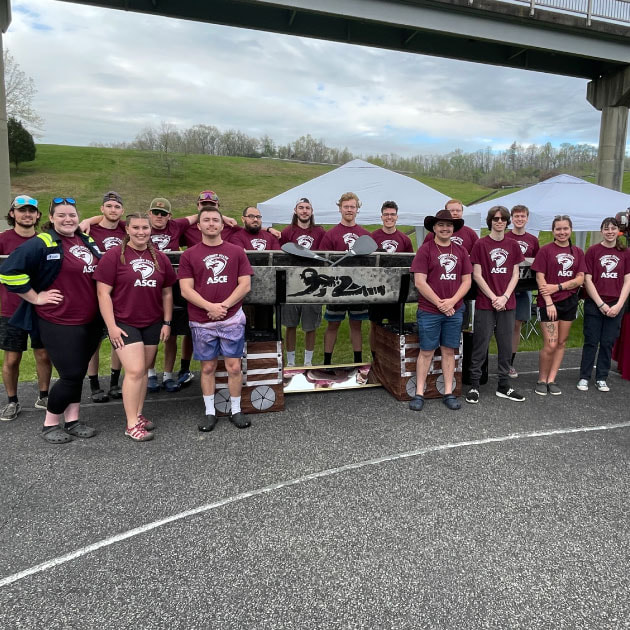
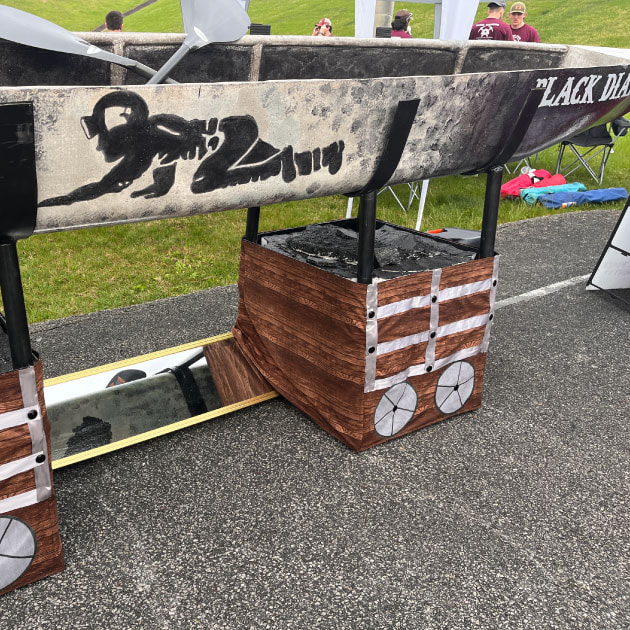
Christine serves on the WVMA Board of Directors and on the Finance Committee of the United Way of Monongalia and Preston County. Previously, she served as the Assistant Treasurer of the United Way of Monongalia and Preston County. She has also served as the Treasurer of a community basketball league and has been both a coach and a coordinator within the same league. Adam Rohaly is an Architect and part owner of Omni Associates Architects in Fairmont. He has twenty years of experience in the architecture field and is a partner in multiple private development companies. Adam is a member of the City of Fairmont ICC Board of Appeals, the Fairmont Field Club Board of Directors, and serves as the Vice President of Augusta Development Corporation. He is also a licensed General Contractor and part owner of a small service plumbing company. Adam lives in Fairmont with his wife, Misty, and their two active sons, Rio and Simon. After graduating from Fairmont State in 1990 with a major in accounting and a minor in computer science, Linda Rudy began a career spanning 30+ years in not-for-profit accounting, financial, and operational management. Early in her career, she served in accounting and financial roles at WVU and the WVU Foundation before serving as Assistant Dean for Finance and Administration in the WVU School of Dentistry and in a financial advisory role in the AVP for Finance area at the WVU Health Sciences Center. During this time, she also earned an MBA from WVU. After stepping out of academia for ten years to lead a physician group practice and the county EMS organization for Mon Health System, Linda returned to higher education to serve as Associate Dean for Finance & Administration in the WVU Schools of Public Health, Dentistry, and the Chambers College of Business & Economics before her family relocated to the Miami, Florida area. While there, Linda served as Senior Business Officer for the University of Miami’s College of Engineering. In 2021, Linda relocated to Richmond, VA to serve as CFO of the William & Mary School of Marine Science, the Virginia Institute of Marine Science (VIMS), and the VIMS Foundation. In her current role, she leads the offices of Finance, Budget, Sponsored Programs, Analytics, Procurement, and Administrative Operations and manages a total financial portfolio of over $200M. In addition to his role as a commercial insurance agent with Mountain State Insurance Agency, Brady Campbell maintains a law practice focused on contract negotiations and criminal defense. He is a graduate of West Virginia University, earning both his bachelor’s and master’s degrees from the school before earning his JD in 2012. In the community, Brady serves as the Chairman for the WV IIABA Young Insurance Professionals. He is the Vice President of the Kanawha-Charleston Humane Association Board of Directors and is a member of the West Virginia Trucking Association Board of Directors. He is a graduate of the FBI Citizens Academy and a former member of the Charleston City Council. Brady also served as the WVU Mountaineer Mascot from 2006 through 2008. In his free time, he enjoys outdoor activities including gardening, camping, golfing, and skiing. He lives in Charleston, WV with his wife, Rachel, and his son, Jack. Santino Cava is a 2019 graduate of West Virginia University and a 2021 graduate of the NADA Academy. He is the son of Dan and Michelle Cava and has served as the General Manager of Dan Cava Toyota World since 2021. Santino has been in the car business with his father for the past eight years. Alethea Moody Wise is the daughter of Fairmont State Basketball Hall of Famer Bill Moody. She is the second woman in WVU Track and Field History to earn the All-American status, and proudly owns the Women’s High Jump outdoor record which was set in 1990 and still stands today. After earning a Marketing degree from WVU, Alethea began her real estate career. She served as the Secretary, Vice President, and President of the Fairmont Board of Realtors and was a member of the MLS Board of Directors. She continues to be a leader in her firm, Compass Realty Group. Along with her husband Ed, Alethea also runs a successful real estate business which strives to give a new start to dilapidated homes that would otherwise be razed. She was recently highlighted by WBOY-12 for her interior design of a home in the South Park Historic District of Morgantown. She is the proud mother of Haley, Ashley, and Sydney, who are all active in the family real estate business. A member of Delta Sigma Theta sorority, Alethea continues to serve her community by working with Scott’s Place to provide affordable housing to those without homes. “The relationship between Fairmont State University and the Fairmont State Foundation is critical to the long-term success of the university and of higher education in the region,” said Fairmont State University President Dr. Mike Davis. “This partnership is bolstered by the impressive backgrounds of the new members who have agreed to serve. The future is bright, and I look forward to building it together.” The new members were approved at the Fairmont State Foundation Board of Directors annual meeting in June, beginning their tenure as board members on July 1. The Foundation Board of Directors is led by Chair Dixie Yann, Vice-Chair Kim Pellillo, Secretary Kevin Wilfong, and Treasurer John Guido. Fairmont State’s American Society of Civil Engineers student chapter swept the concrete canoe competition at the ASCE Virginias Regionals Symposium hosted by Marshall University on April 14. In addition to taking home the overall team title, Fairmont also earned first-place in each of five races as well as the following categories: technical proposal, project presentation and final product. “This has been an exceptional weekend for the student chapter,” said Tabitha Lafferre, Assistant Professor of Civil Engineering Technology and ASCE Student Chapter Faculty Advisor. “The students truly put their heart, blood, sweat and tears in to this year-long project.” The ASCE Virginias Regionals Symposium provides students from schools across West Virginia and Virginia a chance to gain valuable hands-on experience by competing in many engineering-related competitions. For the concrete canoe competition in particular, students must follow strict rules that dictate the contents of the concrete matrix in building the canoe and, of course, the vessel must float, to be eligible to compete in the races. The canoe entered in this year’s competition, named “Black Diamond,” is a tribute to coal miners and West Virginia’s status as a top coal producer in the country. According to Lafferre, this marks the 18th regional level win for Fairmont State. The team will now move on to the national concrete canoe competition at the ASCE Civil Engineering Student Championship hosted by the University of Wisconsin-Platteville from June 10 to 12. “The team always has a goal of placing in the top 10 overall,” said Lafferre. “Even though the regional symposium is over, they’ll continue practicing paddling until the last day of the spring semester.” To help fund the trip, the Fairmont State ASCE student chapter held an elimination dinner at the Knights of Columbus on May 5th. The dinner included a buffet-style meal, historical presentation, keynote address, canoe display, gift basket raffles and a $1,000 cash prize.
Planned enhancements include the addition of Velocity Based Training (Vitruve) devices and ANCORE PRO functional trainers for all eight squat racks in the weight room. With these upgrades, Fairmont State Athletics can continue providing student-athletes with the highest performance training.
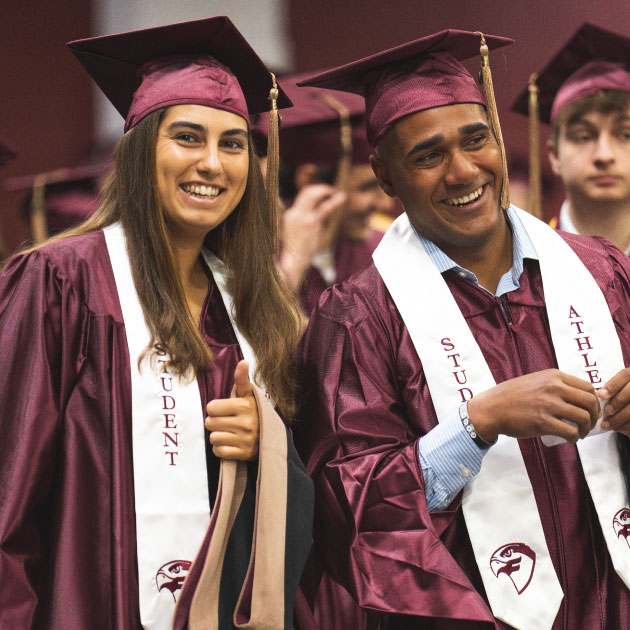
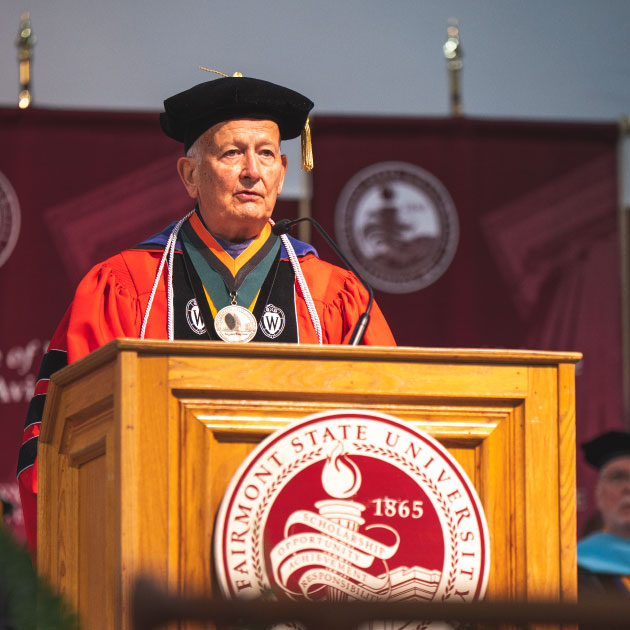
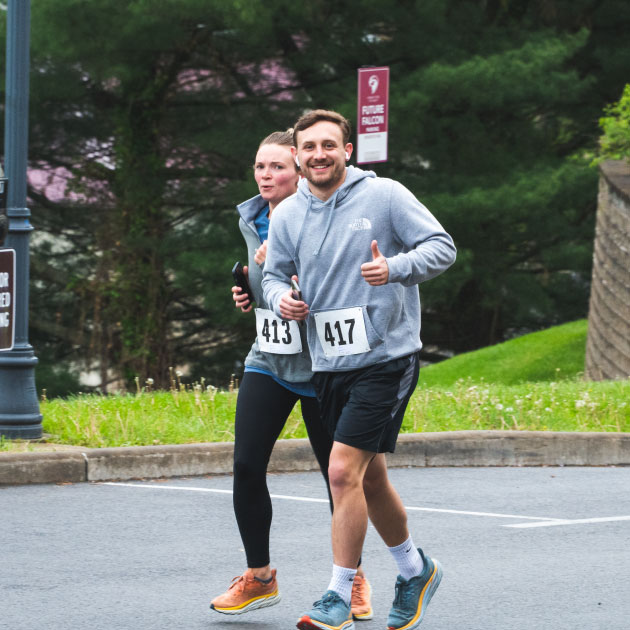
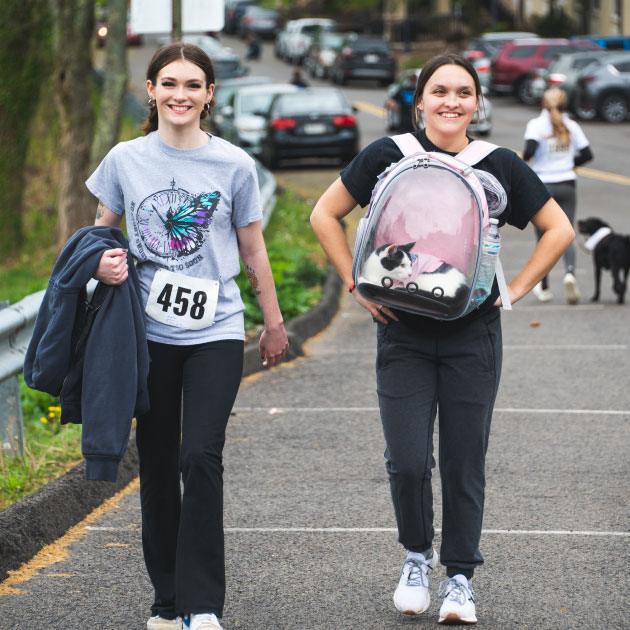
“Our second Fighting Falcons Lift-a-Thon was a huge success,” said Fairmont State’s Head Strength & Conditioning Coach Adam Kolberg. “We had 278 student-athletes participate, and thanks to their tremendous efforts and the gracious support of sponsors, we raised over $8,500 for the strength and conditioning program.” Fairmont State University honored graduates during the University’s 154th Commencement exercises on Saturday, May 6 in the Feaster Center. “Commencement is always an uplifting and exciting event on our campus,” said Interim Provost and Vice President for Academic Affairs Tim Oxley. “Not only does it represent centuries of higher education tradition, it marks a significant milestone in the lives of our graduates that will serve them well throughout their lives. Commencement also reminds the University’s faculty and staff members of the importance of what we do, and why we do it; focused on a culmination of teaching, learning, and student engagement.” This year’s commencement speaker was Fairmont State alumnus William “Bus” Jaco, Ph.D. The Grafton, WV native is Regents Professor Emeritus, Oklahoma State University, and Adjunct Professor of Mathematics at Rice University. He holds degrees from Fairmont State University (B.A. Cum Laude), Penn State University (M.A.), and University of Wisconsin-Madison (Ph.D.). He held faculty positions at University of Michigan and Rice University before joining the faculty at Oklahoma State University as Head of the Department of Mathematics in 1982 and was appointed Grayce B. Kerr Chair in 1993, an endowed position that he held until his retirement in 2021. During his time at Fairmont State, Jaco was heavily involved in Tau Kappa Epsilon Fraternity when not in the classroom. During his speech, he fondly remembered his previous Professor in Mathematics, Dr. James La Rue who he referred to as an “advisor, mentor and friend.” La Rue had encouraged Jaco to continue on to higher education with his studies in math. When Dr. Jaco graduated from the College on the Hill in 1962, his son had attended with him donning a miniature cap and gown. Dr. Jaco returned to campus as commencement speaker and his wife, Linda, and eldest son were again with him for the occasion. Jaco spoke briefly about his many accomplishments, achievements, and experiences that followed graduation from Fairmont State. He had enrolled in classes as a first-generation college student, hoping to make a living as a math teacher. He graduated with the determination and confidence to turn his dream into an incredible career. “Over the 61 years following my graduation from Fairmont State, I have held either a research, a teaching and research, or an administrative position in nine different states, through appointments at twenty different research institutions, and I have travelled the world to collaborate on research and work with colleagues spread across nine countries.” Before ending his speech, Jaco left the graduates with some words of advice, emphasizing the importance of hard work and the inevitability of change. He reminded the class of 2023 to take chances, stating “I would rather be sorry for something I did, than to be sorry for something I never did do.” Finally, he encouraged them to view their time at Fairmont State as only the beginning of a lifetime of learning. When asked about his experience returning to campus as the commencement speaker, he explained that learning of the wide array of programs offered at Fairmont State and seeing the graduates made him “impressed and proud to be there The Fairmont State University Forensic Science Program hosted the second annual ‘Kickin’ it for Katy’ 5K run and walk on Saturday, April 29, on the University’s campus. All proceeds from the race go to the Kaitlynn Towson Forensic Memorial Award to raise awareness around suicide prevention, benefiting Fairmont State Forensic Science students. “We are pleased to see the outpouring of support from this community, and we are excited to watch Kickin’ it for Katy grow,” said Gina Dixon, the grandmother of Kaitlynn Towson. “Our family is proud that Katy’s name and story will be remembered and that we are spreading awareness.” After the race, participants and spectators were invited to the ‘Stomp Out the Stigma’ celebration hosted by Falcon Wellness and Mental Health Services on the Falcon Center Quad for race awards, live music, food vendors, raffle prizes, a dunk tank and more. “These two events are a natural fit together as they both support the mission of suicide awareness and prevention, which is especially important in our college-age students,” said Forensic Science Program Coordinator Mark Flood. “The scholarship money being raised is in memory and support of Katy’s legacy and will mean that these collaborative short-term events will have a longer-lasting impact.” “We want students to know that their mental health is our priority here at Fairmont State University,” said Director of Student Health Chelsea Collins. “All supporters of mental wellness are invited to come and promote mental well-being. Students are not alone, we want them here with us to enjoy life.” Fairmont State’s Ruth Ann Musick Library hosted its first writing contest this March in which Fairmont State University students submitted work based on the American Library Association’s National Library Week theme, “There’s More to the Story.”
Students were encouraged to write either a short story or a poetry submission inspired by the theme of “There’s More to the Story” and the prompt “Photo and/or Diary." Nineteen submissions were received: eight short story submissions and eleven poetry submissions. The selected winners for the short story category include Avary King (first place), Sydney Brooks (second place), and Natalie Clingenpeel (third place). The selected winners of the poetry category include Molly Simpson (first place), Alexandra Mellott (second place), and Vetra Foster (third place). Reilly Crow, a junior Graphic Design Technology major from Glendale, West Virginia, established the contest in partnership with the Ruth Ann Musick Library staff . “People need a way to express themselves,” he said. “When people share stories, there are always some left-out details. With the theme “There’s More to the Story,” we see what reading stories are for.” Each first place winner received a $250 cash prize and publication in next year’s edition of Whetstone, Fairmont State University’s undergraduate literary and art journal. “We have a lot of creative, amazing young people on this campus that are growing, changing, and always doing awesome things,” said Jacquelynn Sherman, Assistant Library Director.“Their accomplishments are just one example, one little piece of the whole that makes Fairmont State such a great place to learn.” |